


Contact us

- Contact number:0755-2708-8292
- Mobile Number:18938693455(Helen Yu)
- Enterprise Email:yw11@zldsmt.com
- Shenzhen Factory (Headquarters):Building A3, Huafa Industrial Park, Fuyong Street, Fuyuan Road, Baoan District, Shenzhen
- Nantong Factory Address:No.268 Jinchuan Road, Nantong Hi-tech Industrial Development Zone, Tongzhou District, Nantong City, Jiangsu Province
- Kunshan Factory Address:No.1318, Shuixiu Road, North Private Industrial Park, Yushan Town, Kunshan City, Jiangsu Province
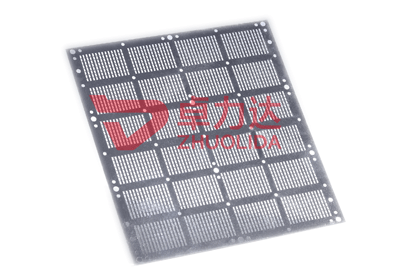
Mask Fixture Processing
- Semiconductor Manufacturing
- Optoelectronic Industry
- Microelectronics
- Aerospace & Avionics
- Precision Optics
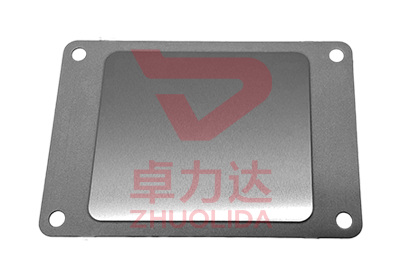
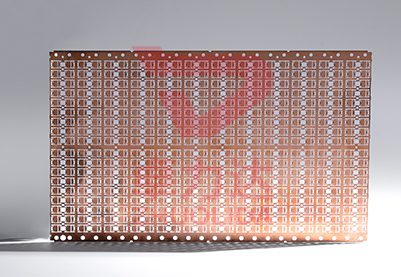
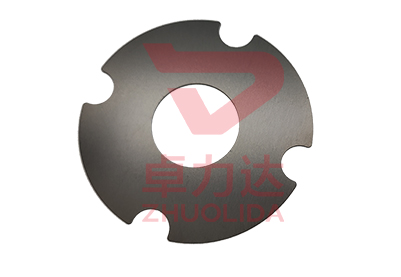
Mask Fixture Processing adopts state-of-the-art photochemical etching technology, a non-contact cold processing method that sets the gold standard for high-precision mask fixture manufacturing. Unlike traditional stamping, milling or laser cutting, chemical etching uses selective chemical corrosion to shape high-grade metals into mask fixtures with unmatched positioning accuracy, dimensional consistency and surface quality—critical for applications where mask alignment precision, clamping stability and surface protection directly affect product quality and manufacturing efficiency.
The core advantage of chemical etching in mask fixture processing is its micron-level positioning precision and dimensional uniformity. Etching technology achieves exceptional dimensional control, with hole positioning error strictly controlled within ±0.001mm, slot width consistency above 99.9% and fitting tolerance within 0.002mm. This level of precision is essential for mask fixture processing, as mask fixtures are responsible for positioning and clamping masks, requiring accurate alignment to ensure the integrity of semiconductor, optoelectronic and optical manufacturing processes. The etched fixtures feature precise hole patterns, smooth slot edges and consistent dimensions, ensuring tight, stable clamping of masks without displacement.
Furthermore, etching ensures superior material integrity and surface protection in mask fixture processing. As a cold processing method, it avoids the thermal damage, burrs and mechanical stress associated with laser cutting or stamping—defects that can scratch delicate masks, cause fixture deformation or reduce service life. High-grade stainless steel and aluminum alloy are selected for their excellent structural stability, corrosion resistance and surface smoothness, and chemical etching preserves these intrinsic properties without altering the material’s composition. The non-contact process eliminates surface scratches and microcracks, achieving a burr-free, smooth surface that protects masks from damage and ensures long-term fixture durability.
The primary advantage of chemical etching in mask fixture processing is its ability to produce high-precision, uniform-positioning fixtures at scale. Stamping often causes uneven hole positioning, slot deformation and burrs, leading to mask misalignment, clamping instability and mask damage. Milling results in inconsistent dimensions and surface roughness, reducing the fixture’s ability to align masks accurately. In contrast, chemical etching in mask fixture processing produces fixtures with micron-level positioning precision, smooth surfaces and consistent dimensions, ensuring reliable mask alignment, stable clamping and mask protection—critical for semiconductor photolithography, optoelectronic display manufacturing and precision optical processing.
Another key benefit is cost-effectiveness and production efficiency. Chemical etching eliminates the need for expensive custom stamping dies or multiple post-processing steps (such as deburring, polishing and positioning calibration), which are required for traditional mask fixture manufacturing. The non-contact process reduces tool wear and maintenance costs, while the panel-based production line enables high-volume manufacturing of fixtures with consistent quality. For manufacturers, this translates to lower production costs, shorter lead times and higher yield rates, making chemically etched mask fixture processing a more economical and reliable solution compared to traditionally processed alternatives.
Chemical etching also offers excellent material versatility and design flexibility in mask fixture processing. It supports processing of various high-grade metals suitable for mask fixtures, including stainless steel (for enhanced durability and corrosion resistance) and aluminum alloy (for lightweight and high surface smoothness), adapting to different mask material and manufacturing environment requirements. Additionally, etching can create complex fixture designs (such as dense hole patterns, custom slots and thin-walled structures) that are difficult or impossible to achieve with traditional methods, even for ultra-precise positioning requirements. This flexibility allows manufacturers to tailor mask fixtures to specific mask types and manufacturing processes, ensuring optimal alignment and clamping performance.
Customer we are doing our best to provide our bestservices to our customers with competitivetech solutions and high quality products,Zhuolida has won wide recognition from ourcustomers in all kinds of industry, andthis have laid a solid foundation for Zhuolida to be an leading brand in etchingindustry in China and a reputablemanufacturer |  |
 | Technology Zhuolida is an etching factory in China with varietiesof process, our company process techniques includechemical etching, laser cutting, EDM, stampingelectroforming, electroplating, electrophoresis. |
Enviroment We have self-built sewage treatment system,the wastewater reuse rate reaches 40% |  |

 Online Inquiry
 Phone Contact