


Contact us

- Contact number:0755-2708-8292
- Mobile Number:18938693455(Helen Yu)
- Enterprise Email:yw11@zldsmt.com
- Shenzhen Factory (Headquarters):Building A3, Huafa Industrial Park, Fuyong Street, Fuyuan Road, Baoan District, Shenzhen
- Nantong Factory Address:No.268 Jinchuan Road, Nantong Hi-tech Industrial Development Zone, Tongzhou District, Nantong City, Jiangsu Province
- Kunshan Factory Address:No.1318, Shuixiu Road, North Private Industrial Park, Yushan Town, Kunshan City, Jiangsu Province
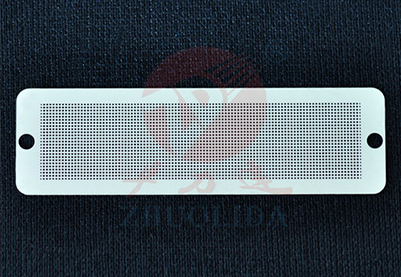
Metal Insect Screen Processing
- 1. Residential Buildings: For window/door insect protection in homes. 2. Commercial Buildings: For ventilation and insect prevention in malls. 3. Agriculture: For greenhouse insect isolation to protect crops.
Metal Insect Screen Processing adopts advanced photochemical etching technology, which is the optimal processing method for high-quality metal insect screens. It integrates precision, durability and practicality, perfectly matching the core requirements of insect isolation, ventilation and long service life for insect screens. As a widely used protective component, metal insect screens require uniform apertures, smooth edges and stable structure, all of which are effectively achieved by the etching process.
First, the etching process achieves uniform aperture control, which is critical for anti-insect effect. The etching tolerance can reach ±0.005mm, and the aperture size can be flexibly controlled between 0.2mm and 1.0mm, effectively blocking insects of different sizes while ensuring unobstructed ventilation. Unlike traditional weaving or stamping, chemical etching is non-contact, avoiding uneven apertures, burrs and edge deformation, which would affect insect isolation and user safety.
Second, the etching process ensures excellent structural durability and corrosion resistance. The etched metal insect screen is made of high-quality metal materials (such as stainless steel, aluminum alloy), and the etching process does not damage the material’s inherent properties, maintaining its high strength and corrosion resistance. The surface of the screen is smooth and burr-free, with a roughness Ra≤0.2μm, which is not easy to rust, deform or break, adapting to indoor and outdoor harsh environments.
Third, the etching process has strong batch stability and design flexibility. The automated etching production line realizes continuous batch processing, with a product yield of over 99.5%, ensuring consistent aperture size, thickness and structure of each insect screen. It supports the etching of various mesh patterns, including square, rectangular and hexagonal apertures, and can be customized according to the size and shape requirements of windows, doors and greenhouses, adapting to multi-scene application needs.
Metal Insect Screen Processing via photochemical etching has obvious advantages over traditional weaving, stamping and other processing methods, and its application fields cover residential, commercial and agricultural fields, playing an important role in insect protection, ventilation and environmental protection, with broad market demand driven by people’s pursuit of comfortable and healthy living and production environments.
In terms of etching advantages, first of all, it has outstanding uniformity and anti-insect effect advantages. Compared with traditional weaving, which is prone to uneven apertures and loose structure, the etching process ensures that each aperture is consistent in size and shape, effectively blocking mosquitoes, flies and other insects without affecting air circulation. Unlike stamping, which may produce burrs and edge warping, the etched insect screen has smooth edges, avoiding scratches on human skin and ensuring user safety.
Secondly, it has strong durability and cost advantages. The etched metal insect screen maintains the inherent strength and corrosion resistance of the base material, which is not easy to rust, fade or deform, with a service life of more than 10 years, far longer than plastic or woven insect screens. The etching process does not require expensive molds, reducing the initial investment cost by more than 75%. For large-volume production, the automated production line further reduces labor costs and improves production efficiency, bringing more cost benefits to enterprises.
Thirdly, it has excellent flexibility and adaptability. The etching process can be flexibly adjusted according to the size, shape and aperture requirements of different application scenarios, whether it is the small windows of residential buildings, the large ventilation ports of commercial buildings, or the large-area greenhouses in agriculture, it can provide customized solutions. The etched insect screen can also be combined with surface treatment processes such as spraying and electroplating to enhance aesthetic performance and adapt to different decoration styles.
In terms of industry applications, the first major field is residential buildings, which is used for insect protection of windows, doors and balconies in homes, creating a comfortable and insect-free living environment for residents. The second field is commercial buildings, which is suitable for ventilation ports, windows and aisles of malls, hotels and office buildings, ensuring ventilation while preventing insects from entering, maintaining a clean and hygienic public environment.

 Online Inquiry
 Phone Contact