


Contact us

- Contact number:0755-2708-8292
- Mobile Number:18938693455(Helen Yu)
- Enterprise Email:yw11@zldsmt.com
- Shenzhen Factory (Headquarters):Building A3, Huafa Industrial Park, Fuyong Street, Fuyuan Road, Baoan District, Shenzhen
- Nantong Factory Address:No.268 Jinchuan Road, Nantong Hi-tech Industrial Development Zone, Tongzhou District, Nantong City, Jiangsu Province
- Kunshan Factory Address:No.1318, Shuixiu Road, North Private Industrial Park, Yushan Town, Kunshan City, Jiangsu Province
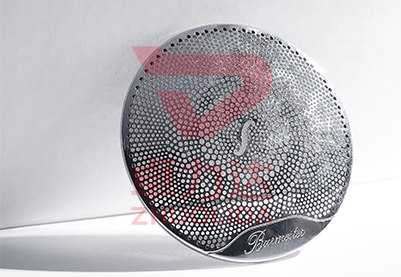
Headphone Speaker Mesh Cover
- TWS True Wireless Headphones: Used as the core protective component of TWS earphone speakers
- blocking earwax and sweat from invading the speaker unit
- while ensuring unobstructed sound transmission.
Headphone Speaker Mesh Cover adopts professional precision etching technology, also known as photochemical etching, which is a high-efficiency, high-precision metal processing method that is widely used in the consumer electronics industry, especially in headphone manufacturing. Unlike traditional stamping and laser cutting, etching is a non-contact cold processing technology that uses chemical reagents to selectively corrode the metal substrate, realizing precise processing of the mesh cover without damaging the base material.
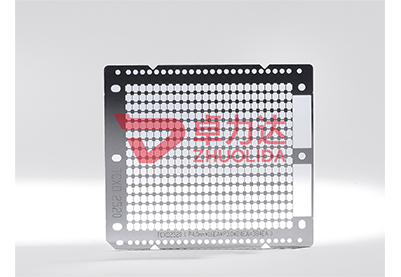
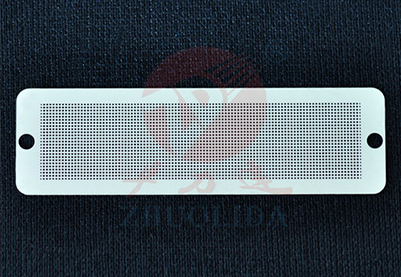
The etching process of the headphone speaker mesh cover has excellent precision control, which can achieve micron-level size control. The minimum hole diameter can reach 0.02mm, and the line width error is strictly controlled within ±0.003mm. The mesh holes processed by etching are evenly distributed, without uneven size or deformation, which can ensure the smooth transmission of sound, avoid sound distortion caused by uneven mesh, and perfectly match the acoustic performance requirements of headphone speakers.
As a non-contact processing technology, etching does not produce mechanical stress on the mesh cover surface, so there are no burrs, microcracks or material deformation. It can well maintain the original toughness and corrosion resistance of the base material (such as SUS304 stainless steel and beryllium copper), ensuring the service life of the headphone speaker mesh cover in long-term use.
Compared with traditional processing technologies such as stamping, laser cutting and weaving, the headphone speaker mesh cover processed by etching has obvious competitive advantages, which makes it the first choice for headphone manufacturers and widely used in the global headphone industry. The core advantages of etching processing are high precision, no material damage, strong customization and high production efficiency.
Compared with stamping technology, etching avoids the problems of burrs, deformation and uneven mesh caused by mechanical extrusion. Stamping requires complex molds, and the mold cost is high. Once the design is changed, the mold needs to be re-made, which increases the R&D cycle and cost. Etching only needs to adjust the photolithography pattern to realize the customization of different specifications, which greatly reduces the R&D cost and shortens the production cycle.
Compared with laser cutting, etching has lower production cost and higher efficiency in mass production. Laser cutting is easy to produce thermal deformation on the mesh surface, affecting the flatness and sound transmission effect, while etching is a cold processing technology, which will not cause thermal damage to the material, ensuring the stability of the mesh cover performance. Weaving technology has limited precision, and it is difficult to process small-size and high-density mesh, which cannot meet the high-precision requirements of modern headphones.
In terms of industry applications, the etched headphone speaker mesh cover is widely used in various types of headphones. It is not only applied to TWS true wireless headphones, over-ear headphones and sports headphones, but also widely used in noise-canceling headphones and kids headphones. With the upgrading of consumer electronics, the demand for high-precision, personalized and waterproof headphone accessories is increasing, and the etched headphone speaker mesh cover has become a core component in headphone manufacturing.

 Online Inquiry
 Phone Contact