


Contact us

- Contact number:0755-2708-8292
- Mobile Number:18938693455(Helen Yu)
- Enterprise Email:yw11@zldsmt.com
- Shenzhen Factory (Headquarters):Building A3, Huafa Industrial Park, Fuyong Street, Fuyuan Road, Baoan District, Shenzhen
- Nantong Factory Address:No.268 Jinchuan Road, Nantong Hi-tech Industrial Development Zone, Tongzhou District, Nantong City, Jiangsu Province
- Kunshan Factory Address:No.1318, Shuixiu Road, North Private Industrial Park, Yushan Town, Kunshan City, Jiangsu Province

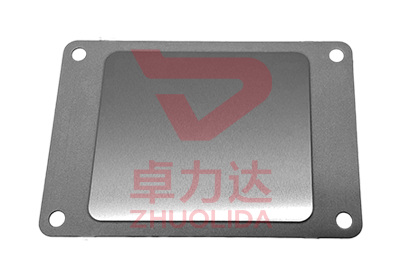
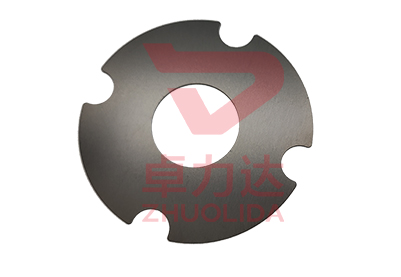
Gasket corrosion processing
- Chemical Industry,Marine Industry,Petrochemical Industry,Pharmaceutical Industry,Wastewater Treatment
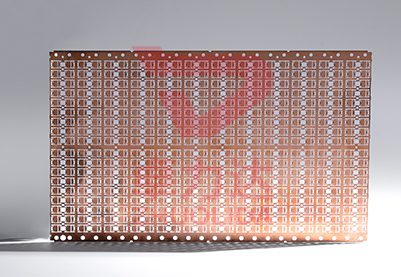
Gasket corrosion processing adopts state-of-the-art photochemical etching technology, a non-contact cold processing method that sets the standard for high-precision corrosion-resistant gasket manufacturing. Unlike traditional coating or plating, chemical etching integrates corrosion resistance with precision processing, creating a uniform, dense corrosion-resistant surface layer while shaping the gasket’s structure, enabling the production of gaskets with unmatched corrosion resistance, precision and sealing reliability—critical for applications where exposure to corrosive media threatens gasket performance and equipment safety.
The core advantage of etching in gasket corrosion processing is itsuniform corrosion-resistant surface and micron-level precision. Etching technology achieves exceptional dimensional control, with gasket thickness error strictly controlled within ±0.001mm, contour accuracy above 99.9% and sealing edge straightness within 0.002mm. Simultaneously, the etching process creates a uniform surface layer that enhances the gasket’s resistance to acids, alkalis, saltwater and industrial solvents, preventing corrosion-induced leakage and extending service life. The etched corrosion-resistant gaskets feature consistent thickness, smooth edges and a dense surface, ensuring perfect fit and reliable sealing in corrosive environments.
Furthermore, etching ensures superior material integrity and corrosion durability. As a cold processing method, it avoids the thermal damage, burrs and mechanical stress associated with laser cutting or stamping—defects that can compromise the corrosion-resistant layer and lead to premature gasket failure. Corrosion-resistant materials (316L stainless steel, Hastelloy) are selected for their intrinsic anti-corrosion properties, and chemical etching preserves these properties while enhancing surface density, creating a barrier against corrosive media. The non-contact process eliminates surface scratches and microcracks, avoiding corrosion points and ensuring the gasket maintains its sealing performance in long-term corrosive service.
Show picture


Gasket corrosion processing using chemical etching offers distinct competitive advantages over traditional manufacturing methods such as coating, plating and mechanical stamping. These advantages make etched corrosion-resistant gaskets the preferred choice for global chemical, marine and petrochemical manufacturers, where corrosion resistance, precision and sealing reliability are critical for product quality and operational safety.
The primary advantage of chemical etching in gasket corrosion processing is its ability to integrate corrosion resistance and precision processing at scale. Traditional coating or plating often results in uneven surface layers, poor adhesion and vulnerability to peeling, leading to corrosion and leakage. Stamping causes mechanical stress and burrs, creating corrosion points that compromise the gasket’s service life. In contrast, chemical etching creates a uniform, dense corrosion-resistant surface while achieving micron-level precision, ensuring the gasket resists corrosive media and maintains perfect fit—critical for chemical reactors, marine equipment and petrochemical pipelines.
Another key benefit is cost-effectiveness and long-term reliability. Chemical etching eliminates the need for additional coating/plating steps and post-processing (such as deburring and corrosion testing), which are required for traditional methods. The non-contact process reduces tool wear and maintenance costs, while the panel-based production line enables high-volume manufacturing with consistent quality. For manufacturers, this translates to lower production costs, shorter lead times and reduced maintenance expenses, as etched corrosion-resistant gaskets have a longer service life and lower failure rate compared to traditionally processed alternatives.
Chemical etching also offers excellent material versatility and design flexibility. It supports processing of various corrosion-resistant materials, including 316L stainless steel (for general corrosive environments), Hastelloy (for extreme corrosion) and titanium (for high-temperature corrosion), adapting to different corrosive scenarios. Additionally, chemical etching can create complex gasket designs (such as irregular contours, micro-slots and multi-hole patterns) that are difficult or impossible to achieve with traditional methods, ensuring the gasket fits perfectly with mating components in diverse equipment.
Customer we are doing our best to provide our bestservices to our customers with competitivetech solutions and high quality products,Zhuolida has won wide recognition from ourcustomers in all kinds of industry, andthis have laid a solid foundation for Zhuolida to be an leading brand in etchingindustry in China and a reputablemanufacturer |  |
 | Technology Zhuolida is an etching factory in China with varietiesof process, our company process techniques includechemical etching, laser cutting, EDM, stampingelectroforming, electroplating, electrophoresis. |
Enviroment We have self-built sewage treatment system,the wastewater reuse rate reaches 40% |  |

 Online Inquiry
 Phone Contact