


Contact us

- Contact number:0755-2708-8292
- Mobile Number:18938693455(Helen Yu)
- Enterprise Email:yw11@zldsmt.com
- Shenzhen Factory (Headquarters):Building A3, Huafa Industrial Park, Fuyong Street, Fuyuan Road, Baoan District, Shenzhen
- Nantong Factory Address:No.268 Jinchuan Road, Nantong Hi-tech Industrial Development Zone, Tongzhou District, Nantong City, Jiangsu Province
- Kunshan Factory Address:No.1318, Shuixiu Road, North Private Industrial Park, Yushan Town, Kunshan City, Jiangsu Province
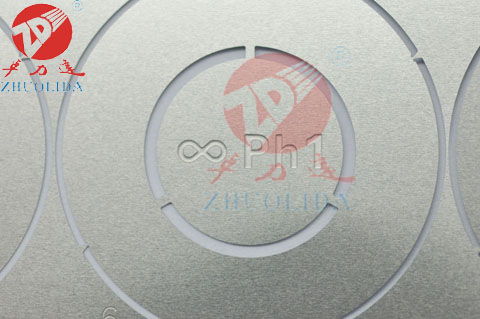
Medical microscope accessories
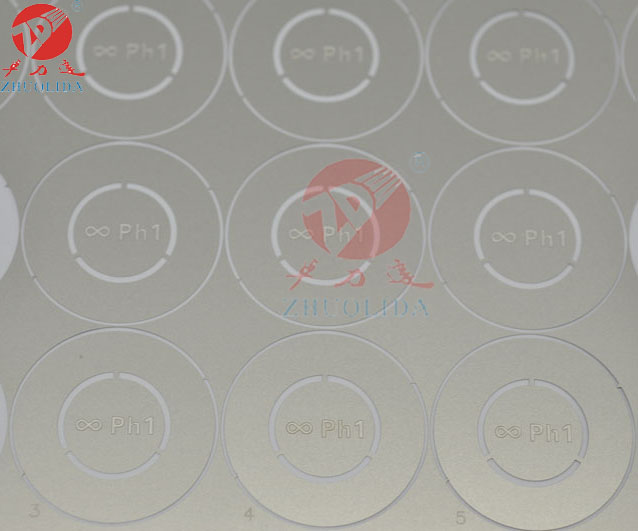
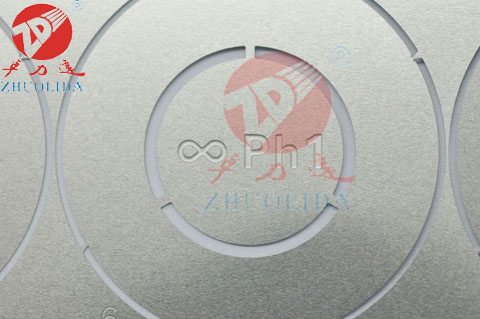
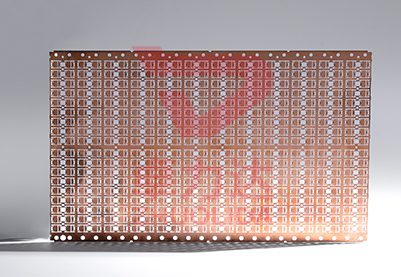
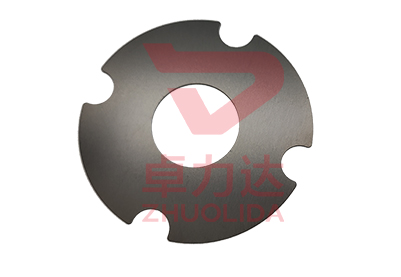
Medical microscope accessories, stainless steel grating positioning piece
Application area
- Medical microscope accessories
Product features
Medical Microscope Accessories adopt state-of-the-art photochemical etching technology, also known as photochemical machining (PCM), which is revolutionizing the manufacturing of high-precision medical instruments. Unlike traditional mechanical processing, etching uses selective chemical corrosion to shape metal surfaces without physical contact, making it the ideal technology for producing micro-components with extreme precision requirements—critical for medical microscopes where even minute deviations can compromise diagnostic accuracy.
At the core of etched medical microscope accessories lies unparalleled precision control. Etching achieves micro-meter level dimensional regulation, with the minimum aperture size reaching 0.01mm and line width error strictly controlled within ±0.002mm. This level of accuracy is vital for optical components such as aperture diaphragms and filter frames, as it ensures uniform light transmission, minimal light scattering, and consistent image resolution. The evenly distributed micro-structures processed by etching eliminate optical distortion, providing sharp, clear visualization for surgeons and researchers.
Furthermore, the etching process guarantees superior surface quality and biocompatibility. As a non-contact cold processing method, it avoids mechanical stress, burrs, and micro-cracks on the metal surface—defects that could cause tissue irritation or contamination in medical applications. The smooth, burr-free surface of etched accessories meets ISO 10993 biocompatibility standards, eliminating the risk of particle shedding and ensuring long-term safety in clinical settings. Whether fabricated from 316L stainless steel or titanium alloy, etching preserves the material's corrosion resistance and mechanical integrity, enabling repeated sterilization without performance degradation.
In addition, etching supports complex structural customization with high consistency. Medical microscope accessories often require intricate patterns, gradient holes, or special-shaped structures to meet specific optical design needs. Etching enables the one-step molding of these complex geometries through photolithography mask design, eliminating the need for multiple processing steps. The roll-to-roll or panel-based production process ensures batch consistency, with dimensional variation between units limited to less than 0.001mm and a yield rate stable above 99.5%. This not only meets the mass production demands of medical device manufacturers but also shortens the R&D cycle for customized designs.
Show picture
Product advantages
Medical Microscope Accessories processed by etching technology offer distinct competitive advantages over traditional manufacturing methods such as stamping, laser cutting, and mechanical drilling, making them the preferred choice for leading medical device companies worldwide. These advantages, combined with their wide-ranging applications, solidify etching's role as a core technology in the medical microscopy industry.
The primary advantage of etching is its ability to process ultra-fine, high-precision structures. Stamping and mechanical drilling struggle to produce features smaller than 0.1mm, often resulting in burrs, deformation, and poor surface finish—defects that are unacceptable for medical microscopes. Laser cutting, while precise, causes thermal deformation and heat-affected zones (HAZ) that alter material properties and degrade optical performance. In contrast, etching can effortlessly produce sub-0.01mm apertures with crisp, clean edges, making it the only viable solution for the micro-optical components required in modern surgical and laboratory microscopes. This precision directly translates to improved image quality, reduced diagnostic errors, and enhanced surgical outcomes.
Another critical benefit is elimination of post-processing contamination risks. Medical devices demand strict cleanliness to prevent infection and ensure patient safety. Etched accessories are inherently burr-free and debris-free, eliminating the need for time-consuming and costly post-processing cleaning or deburring steps. The non-contact process avoids metal chips or debris contamination, meeting the stringent cleanliness requirements of medical device regulations such as FDA and CE. This not only streamlines production but also reduces the risk of product recalls due to contamination issues.
In terms of material versatility, etching supports a wide range of biocompatible metals, including 316L stainless steel, titanium alloy, nickel-titanium alloy, and gold-plated materials. This flexibility allows medical microscope accessories to be tailored to specific application requirements: 316L stainless steel offers excellent corrosion resistance for general laboratory use, titanium alloy provides lightweight strength for portable surgical microscopes, and gold-plated materials enhance electrical conductivity for optical components with electronic integration. This level of material customization is difficult to achieve with other processing methods, making etching the ideal solution for diverse medical microscopy needs.
Industry-wide applications of etched medical microscope accessories continue to expand with the advancement of medical technology. In surgical microscopes, etched aperture diaphragms and filter frames enable precise light intensity control and wavelength selection, supporting complex procedures such as ophthalmic microsurgery and neurosurgery. In laboratory microscopes, custom sample stage meshes and slide inserts facilitate high-throughput sample analysis, accelerating biological and pathological research. In dental and endoscopic systems, etched precision components ensure clear visualization and reliable operation in minimally invasive procedures. As medical technology evolves toward miniaturization and high precision, the demand for etched medical microscope accessories will continue to grow, driving innovation in both the medical device and precision manufacturing industries.

 Online Inquiry
 Phone Contact