


Contact us

- Contact number:0755-2708-8292
- Mobile Number:18938693455(Helen Yu)
- Enterprise Email:yw11@zldsmt.com
- Shenzhen Factory (Headquarters):Building A3, Huafa Industrial Park, Fuyong Street, Fuyuan Road, Baoan District, Shenzhen
- Nantong Factory Address:No.268 Jinchuan Road, Nantong Hi-tech Industrial Development Zone, Tongzhou District, Nantong City, Jiangsu Province
- Kunshan Factory Address:No.1318, Shuixiu Road, North Private Industrial Park, Yushan Town, Kunshan City, Jiangsu Province
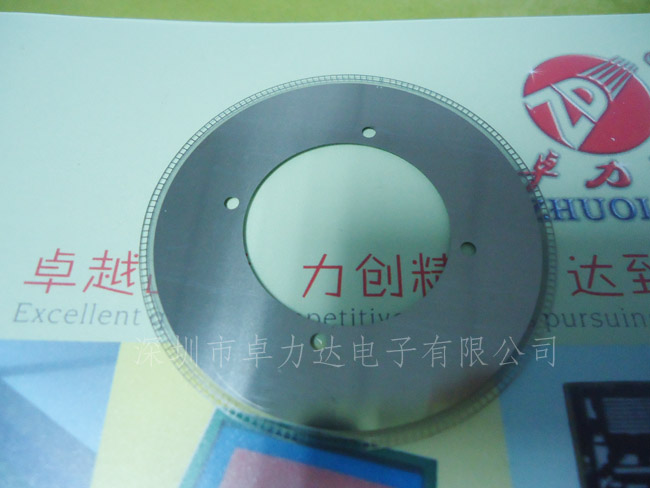
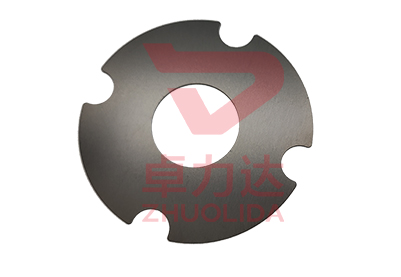
Robot Encoder Code Disk Processing
- 1. Industrial Robots: For position and speed detection in industrial robot joints and motion control systems. 2. Collaborative Robots: For precise motion feedback in cobots to ensure safe and accurate operation.
Robot Encoder Code Disk Processing adopts advanced photochemical etching technology, tailored to the core requirements of robot encoder code disks—ultra-precise grating patterns, high accuracy, stability, and wear resistance. This process integrates micro-level precision control, material compatibility, and batch consistency, making it the optimal manufacturing solution for high-performance encoder code disks used in industrial and collaborative robot fields, where precision directly determines robot motion control accuracy.
First, the etching process achieves exceptional grating precision and dimensional accuracy, the core of encoder code disk performance. The etching tolerance can reach ±0.001mm, with grating line width, spacing, and depth precisely controlled to ensure consistent signal output. Unlike mechanical cutting or laser engraving, chemical etching is a non-contact, cold process that avoids thermal damage, edge burrs, and pattern distortion, ensuring each grating is clear, uniform, and accurately positioned for reliable motion feedback.
Second, the etching process ensures superior stability and wear resistance. The automated etching system precisely controls etchant concentration, temperature, and processing time, achieving uniform pattern quality and consistent material structure. The smooth, burr-free surface (Ra ≤ 0.10μm) reduces friction and wear during robot operation, while the intact material structure maintains high stability even in harsh industrial environments (temperature changes, vibration), ensuring long-term reliable performance.
Third, the etching process offers strong batch stability and design flexibility. It ensures consistent quality across large production runs, with a yield of over 99.7%, minimizing waste and rework. The process supports various grating patterns—including incremental, absolute, and custom designs—tailored to the specific motion control needs of industrial and collaborative robots, without the need for expensive tooling adjustments.
Show picture
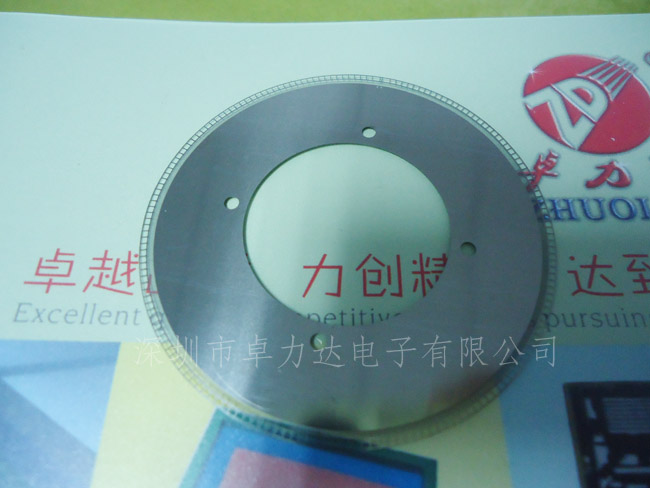
Robot Encoder Code Disk Processing via photochemical etching has distinct advantages over traditional mechanical cutting, laser engraving, and stamping processes, especially for optimizing grating precision and stability of encoder code disks. Its application fields focus on industrial robots and collaborative robots—two fast-growing industries driven by the demand for high-precision motion control—making it an indispensable technology for modern robot manufacturing.
In terms of etching advantages, first, it solves the core challenge of producing high-precision grating patterns for accurate motion feedback. Mechanical cutting often causes irregular grating lines, burrs, and dimensional errors, which lead to inaccurate signal output and poor robot motion control. Laser engraving, by contrast, generates heat that creates a recast layer and thermal stress, degrading pattern stability and wear resistance. Etching avoids these issues, delivering clear, uniform grating patterns with precise dimensions, ensuring accurate position and speed detection for robots.
Second, it offers superior cost efficiency and design flexibility. Unlike stamping, which requires expensive custom molds and long lead times for design changes, etching eliminates hard tooling needs—design modifications only require updating the photomask, reducing custom development costs by over 80%. For large-volume production, the automated line ensures high throughput and low per-unit costs, suitable for both industrial-grade robots and collaborative robots.
Third, it has strong material adaptability. The process can etch encoder code disks in a wide range of materials, including stainless steel, copper alloy, and aluminum, while preserving their inherent properties—such as wear resistance for industrial robots and lightweight for collaborative robots. This versatility makes it suitable for diverse robot models, from heavy-duty industrial robots to compact cobots.
In terms of industry applications, the first major field is industrial robots. Etched encoder code disks are core components in industrial robot joints, arms, and motion control systems, providing accurate position and speed feedback to ensure precise movement in manufacturing, assembly, and logistics. Their high precision and stability enable robots to complete complex tasks with high efficiency and accuracy, meeting the demands of industrial automation.
The second major field is collaborative robots. As cobots become more widely used in workplaces alongside humans, etched encoder code disks provide precise motion feedback to ensure safe, smooth operation. Their wear resistance and stability withstand frequent motion, while their high accuracy prevents collisions and ensures consistent performance. With the growth of industrial automation and collaborative robotics, the demand for Robot Encoder Code Disk Processing will continue to expand, solidifying its role as a critical component in robot motion control systems.
Customer we are doing our best to provide our bestservices to our customers with competitivetech solutions and high quality products,Zhuolida has won wide recognition from ourcustomers in all kinds of industry, andthis have laid a solid foundation for Zhuolida to be an leading brand in etchingindustry in China and a reputablemanufacturer |  |
 | Technology Zhuolida is an etching factory in China with varietiesof process, our company process techniques includechemical etching, laser cutting, EDM, stampingelectroforming, electroplating, electrophoresis. |
Enviroment We have self-built sewage treatment system,the wastewater reuse rate reaches 40% |  |

 Online Inquiry
 Phone Contact