


Contact us

- Contact number:0755-2708-8292
- Mobile Number:18938693455(Helen Yu)
- Enterprise Email:yw11@zldsmt.com
- Shenzhen Factory (Headquarters):Building A3, Huafa Industrial Park, Fuyong Street, Fuyuan Road, Baoan District, Shenzhen
- Nantong Factory Address:No.268 Jinchuan Road, Nantong Hi-tech Industrial Development Zone, Tongzhou District, Nantong City, Jiangsu Province
- Kunshan Factory Address:No.1318, Shuixiu Road, North Private Industrial Park, Yushan Town, Kunshan City, Jiangsu Province
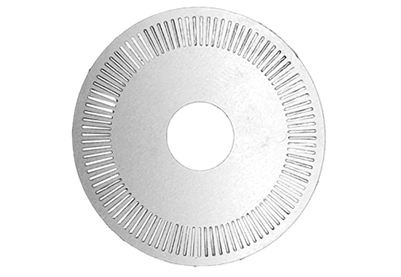
Electric Drive Encoder Code Disc Processing
- 1. Electric Vehicles: For EV motor speed and position detection. 2. Industrial Drives: For servo drive motion control. 3. Robotics: For robot joint position and speed feedback.
Electric Drive Encoder Code Disc Processing adopts advanced photochemical etching technology, which is the core processing method for high-performance encoder code discs. It integrates ultra-high precision, stable signal performance and excellent structural integrity, perfectly matching the strict requirements of electric drive systems for position and speed detection accuracy. As a key component of encoders, the code disc requires precise grating patterns, uniform line width and stable light transmission, all of which are effectively achieved by the etching process.
First, the etching process achieves ultra-fine grating precision, which is critical for encoder resolution. The etching tolerance can reach ±0.001mm, and the grating line width can be controlled between 0.003mm and 0.05mm, supporting high-resolution encoding (up to 1024 lines per inch). Unlike traditional mechanical engraving, chemical etching is non-contact, avoiding edge burrs, deformation and surface scratches that would interfere with signal detection and reduce encoding accuracy.
Second, the etching process ensures excellent surface quality and signal stability. After etching, the code disc surface is smooth and flat with a roughness Ra≤0.08μm, reducing light scattering and ensuring uniform light transmission between grating lines. The etching process does not damage the base material (such as stainless steel, aluminum alloy, glass), maintaining its inherent physical and mechanical properties, which is essential for the long-term stable operation of electric drive encoders in harsh working environments.
Third, the etching process has strong batch stability and pattern flexibility. The automated etching production line realizes continuous batch processing, with a product yield of over 99.7%, ensuring consistent grating accuracy and signal performance of each code disc. It supports the etching of complex grating patterns, including incremental gratings, absolute gratings and special-shaped encoding patterns, which can be customized according to the design requirements of different electric drive systems, adapting to multi-variety and high-volume production needs.
Electric Drive Encoder Code Disc Processing has obvious advantages over traditional mechanical engraving, laser cutting and other processing methods, and its application fields cover the core links of the electric drive industry. It plays a key role in electric vehicles, industrial drives and robotics, and its market demand is growing with the development of electric drive technology and industrial automation.
In terms of etching advantages, first of all, it has outstanding precision and signal stability advantages. Compared with laser cutting, which is prone to thermal deformation and edge carbonization, the etching process achieves non-contact and cold processing, ensuring smooth grating edges and flat surfaces, which significantly improves signal accuracy and reduces signal interference. The ultra-fine precision control also meets the high-resolution development trend of electric drive encoders, adapting to the demand for precise motion control.
Secondly, it has strong flexibility and cost advantages. The etching process does not require expensive molds or laser engraving equipment, reducing the initial investment cost by more than 80%. It can quickly adjust the grating pattern, line width and size according to customer needs, without replacing production equipment, which is suitable for small-batch, multi-variety production and shortens the product launch cycle. For large-volume production, the automated production line further reduces labor costs and improves production efficiency.
Thirdly, it has excellent environmental adaptability and durability. The etched code disc has good corrosion resistance and wear resistance, which can withstand high temperature, humidity and vibration in electric drive working environments, ensuring long-term stable operation (service life up to 100,000 hours). The etching process also supports surface treatment processes such as passivation and coating, further enhancing the product’s durability and environmental adaptability.
In terms of industry applications, the first major field is electric vehicles, which is used for the processing of code discs in EV motor encoders, realizing accurate detection of motor speed and position, and ensuring stable operation of electric vehicle power systems. The second field is industrial drives, which provides high-precision code discs for servo drives, frequency converters and other equipment, ensuring precise motion control of industrial machinery.


 Online Inquiry
 Phone Contact