


Contact us

- Contact number:0755-2708-8292
- Mobile Number:18938693455(Helen Yu)
- Enterprise Email:yw11@zldsmt.com
- Shenzhen Factory (Headquarters):Building A3, Huafa Industrial Park, Fuyong Street, Fuyuan Road, Baoan District, Shenzhen
- Nantong Factory Address:No.268 Jinchuan Road, Nantong Hi-tech Industrial Development Zone, Tongzhou District, Nantong City, Jiangsu Province
- Kunshan Factory Address:No.1318, Shuixiu Road, North Private Industrial Park, Yushan Town, Kunshan City, Jiangsu Province
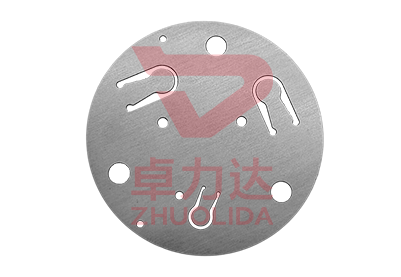
Etched metal gaskets
- Electronic instruments
- mold manufacturing
- precision machinery
- hardware parts
- mechanical parts
- stamping parts
- small hardware manufacturing
Metal shim etching is an advanced precision manufacturing technique primarily employing photochemical etching principles. Through processes such as photoresist exposure, development, and chemical solution corrosion, it precisely removes unwanted material from thin metal sheets to form high-precision metal shim structures. The metal shim fabrication process requires neither rigid moulds nor mechanical pressure application. Consequently, it entirely circumvents issues such as burrs, deformation, and internal stresses inherent to traditional stamping. This ensures smooth, flat edges with dimensional tolerances controllable to within ±0.01mm, or even higher precision.
The defining characteristic of metal shim etching lies in its non-contact processing nature. The material achieves a short cycle from design to finished product, requiring only a digital photolithography plate (flexible mould) to enable rapid pattern iteration and adjustment. This makes it particularly suited to small-batch, multi-variety prototyping requirements. Concurrently, this process readily accommodates semi-etching techniques, enabling the creation of grooves or stepped structures of varying depths within a single substrate. This offers exceptional design flexibility for multi-layer gaskets or peelable gaskets. The processing capability spans a broad thickness range, reliably handling materials from ultra-thin 0.005mm sheets to plates exceeding 1mm, without altering the metal's physical properties such as hardness, electrical conductivity, or magnetic characteristics.
In practice, metal shim etching commences with surface cleaning and photoresist coating of the metal plate. The design pattern is then transferred onto the material via ultraviolet light exposure. Following development, unprotected areas are exposed to an etchant (such as ferric chloride solution), uniformly removing the metal. This low-temperature process eliminates thermal influence zones, thereby preventing thermal deformation or microstructural alterations in the metal shim. Compared to laser cutting, metal gasket etching offers superior advantages when processing complex curves, minute apertures, and high-density arrays. It enables extremely fine line widths (as low as 0.05mm) and structures with high aspect ratios.
Furthermore, metal gasket processing demonstrates high environmental sustainability and material utilisation. The etching solution is recyclable, waste liquid treatment is regulated, and minimal scrap is generated due to the absence of mechanical cutting. For common materials such as stainless steel, copper alloys, and nickel-based alloys, metal shim etching consistently delivers uniform surface quality and batch stability. This makes the process particularly well-suited for precision sealing applications demanding high reliability and extended service life. Overall, metal shim etching stands as one of the preferred technologies for modern precision metal shim manufacturing, owing to its high precision, stress-free nature, flexibility, and cost-effectiveness.

Metal gasket etching offers significant advantages over traditional manufacturing methods. Firstly, utilising chemical corrosion principles, this process eliminates the need for rigid moulds, resulting in low development costs and short lead times. Design modifications can be followed by sample delivery within days, substantially accelerating product iteration. Secondly, the process generates no heat or mechanical stress, ensuring gaskets remain perfectly flat, burr-free, distortion-free, and free from residual stresses. This preserves the material's inherent properties—such as conductivity, elasticity, and fatigue resistance—which is particularly critical for thin or precision gaskets. It prevents seal failure during assembly caused by stress release.
Thirdly, the machining precision of metal gaskets is exceptionally high, with tolerances achievable between ±0.005 and ±0.01mm. This makes them suitable for complex contours, micro-pore arrays, or intricate gap designs. Advanced functionalities such as semi-etching, multi-layer stacking, and peelable structures are also supported, meeting customisation requirements. Fourthly, batch production exhibits excellent consistency, facilitating seamless transition from pilot trials to mass manufacturing. High material utilisation and minimal secondary processing render overall costs more competitive for complex components. Fifthly, the range of applicable materials is extensive, encompassing stainless steel, copper, aluminium, titanium, nickel alloys, and more. Corrosion resistance and high-temperature tolerance can be flexibly selected according to industry requirements.
In industrial applications, metal shims are extensively utilised in the automotive sector for precision sealing and gap adjustment in engine blocks, exhaust manifolds, and gearboxes. Etched metal shims ensure reliable sealing under high-temperature and high-pressure conditions. The aerospace industry demands exceptional lightweighting and precision; metal shim processing serves sensors, fuel systems, and EMI shielding components, achieving both weight reduction and high reliability. Within electronics and communications, metal gaskets frequently serve as shielding covers, conductive springs, and thermal pads. Etched metal gaskets support high-density microstructures, meeting stringent standards for 5G and semiconductor equipment.
The medical device sector benefits from their burr-free, contamination-free properties. Metal gaskets are employed in micro-pumps, valves, and surgical instrument seals, ensuring biocompatibility and cleanliness. Within new energy sectors—such as lithium batteries, fuel cells, and hydrogen equipment—metal gasket etching provides corrosion-resistant, high-seal solutions that effectively prevent electrolyte leakage. Industrial equipment including pumps, valves, heat exchangers, and pressure vessels extensively utilise these gaskets to enhance system safety and maintenance efficiency. In summary, metal gasket etching, with its unique technical advantages, is driving multiple high-end manufacturing sectors towards greater precision and reliability.


 Online Inquiry
 Phone Contact